
Concussion Management: What Every Athlete, Parent and Coach Needs to Know
Concussion is one of the most common yet often misunderstood injuries in sport. It does not require a loss of consciousness and it does not always present immediately. It is a mild traumatic brain injury caused by forces that make the brain move within the skull. These forces can come from a direct hit to the head or from a sudden impact to the body that creates rapid acceleration and deceleration.
Across my sporting life I have seen the full spectrum of concussion. Before becoming a physiotherapist, I spent years as a competitive sailor. The combination of fast manoeuvres, swinging booms and unpredictable wind shifts meant that head knocks were simply part of the landscape. Almost every regatta involved at least one sailor getting hit by equipment or jolted off balance. Those experiences shaped my understanding of how easily concussion can occur and how important early recognition is.
The same applies to my current work with Surf Life Saving Australia. At Aussies we manage several concussions each year, with the highest number occurring in the high speed events such as ski and surf boats. These are dynamic, chaotic environments where athletes are travelling fast, navigating unpredictable surf and dealing with crowded water. Impacts from oars, boats, athletes being thrown, or sudden forceful movements are common mechanisms of injury. We also see concussions on the beach, most often in beach flags where head clashes can occur at full speed. It reinforces that concussion is not a sign of weakness. It is a physiological injury that needs structured management and a graded return to activity.
This post will go through a detailed, evidence based breakdown of how concussion should be assessed, monitored and managed in a sports physiotherapy setting.
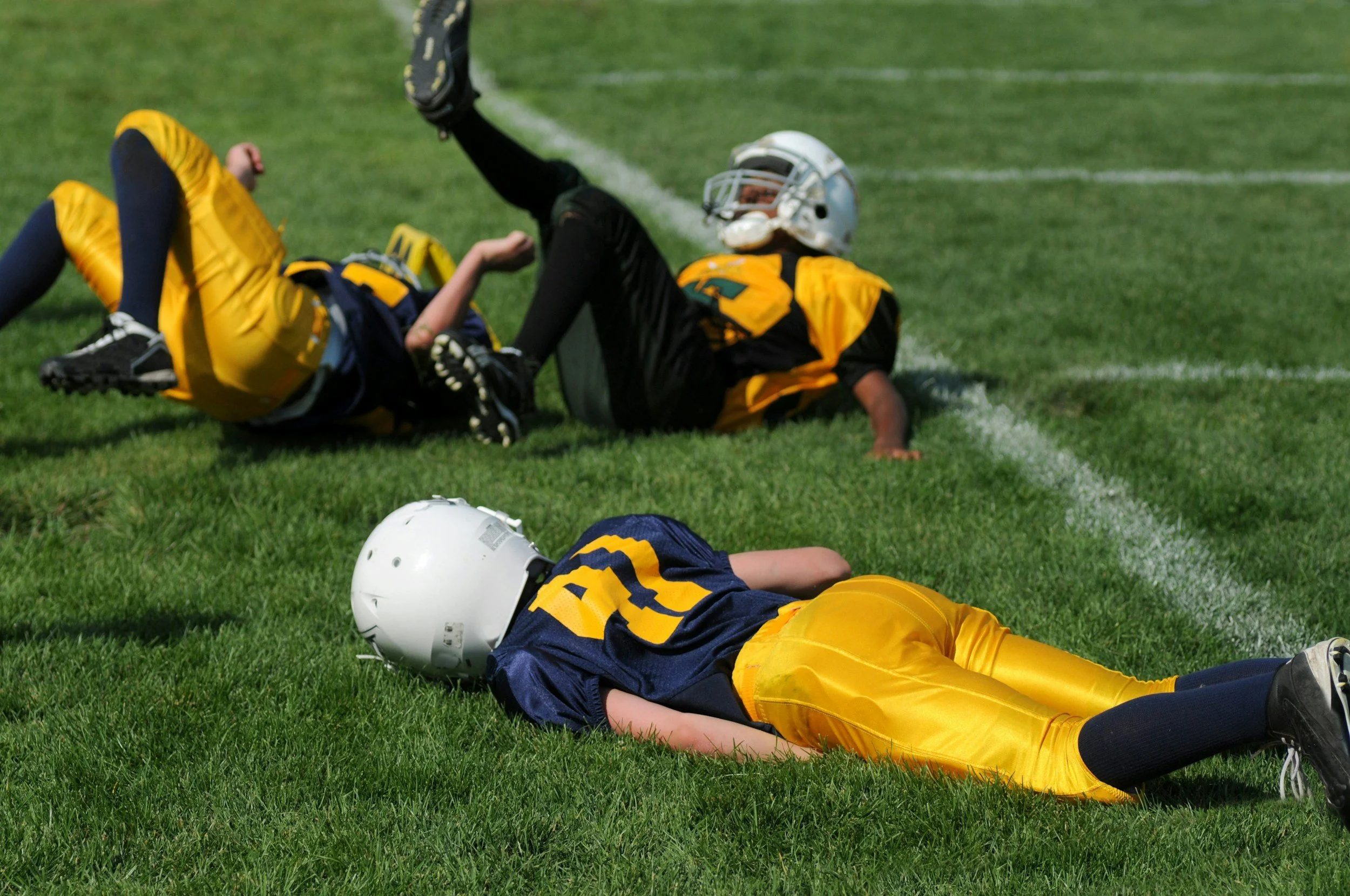
Initial On Field and On Beach Assessment
When a concussion is suspected during an event or training session, the athlete must be removed from play immediately. Continuing to compete places them at risk of second impact syndrome which has serious and sometimes lifelong consequences.
1. Check for red flags
These symptoms require urgent medical attention
• Neck pain or tenderness
• Weakness or tingling in limbs
• Severe or worsening headache
• Repeated vomiting
• Unusual behaviour or agitation
• Seizure or convulsions
• Double vision
• Loss of consciousness
2. Basic first aid
• Ensure airway, breathing and circulation are stable
• Protect the cervical spine if the mechanism is unclear
• Keep the athlete calm and supervised
3. Remove from play
Even if symptoms seem minor, the athlete is finished for the day. There is no safe same day return in any sport.
Early Clinical Assessment
Once immediate danger is ruled out, a structured assessment should be completed by a physiotherapist or medical professional trained in concussion.
This includes:
Subjective history
• Mechanism of injury
• Immediate symptoms
• Presence of confusion or memory loss
• Previous concussions
• Medical history such as migraines or mental health conditions
Symptom evaluation
Using a validated symptom scale to track dizziness, nausea, headache, visual changes, cognitive fog, fatigue and emotional symptoms.
Neurological examination
• Cranial nerves
• Coordination
• Balance
• Gait
• Vestibular and oculomotor screening
Cognitive screening
Orientation, memory and concentration testing using tools like SCAT6 or SCOAT6.
Cervical spine assessment
The neck is often irritated in concussion due to force transfer. This can contribute to headaches, dizziness and motion sensitivity.
The First 48 Hours
Complete rest is no longer recommended. Instead we focus on:
• Relative rest
• Light daily activity as tolerated
• Avoiding symptom spikes
• Short periods of screen time if tolerated
• Gentle walking
• No driving until cleared
• Avoiding alcohol and heavy exercise
Monitoring by a responsible adult for the first 24 hours is ideal.
Rehabilitation in the Clinic
Physiotherapy is central to recovery because many persistent symptoms stem from the vestibular system, vision, cervical spine or autonomic regulation.
1. Cervical spine treatment
Managing joint irritation, guarding and neck related dizziness.
2. Vestibular rehabilitation
Improving balance, gaze stability and motion tolerance.
3. Visual retraining
Working on convergence, tracking and visual motion sensitivity.
4. Graded aerobic exercise
Sub symptom threshold training is strongly supported by research and is one of the best interventions for concussion recovery.
5. Education and reassurance
Helping athletes understand what is normal, what to expect and how to progress safely.
Return to Sport Pathway
Each stage should take at least 24 hours and the athlete must remain symptom free before progressing.
Stage 1
Light daily activity and normal sleep routines
Stage 2
Light aerobic exercise such as walking or cycling
Stage 3
Moderate intensity exercise and simple sport specific drills
Stage 4
Non contact training such as change of direction, tempo work and skill drills
Stage 5
Full contact training once medically cleared
Stage 6
Return to full competition
If symptoms return, the athlete should move back to the previous successful stage.
Concussion in the Surf Life Saving Environment
Ski and surf boat athletes are exposed to high forces, unpredictable surf and quick directional changes. These conditions create a perfect storm for concussion. Boat rollovers, oar strikes and athletes being thrown forward (or backwards for that matter) in broken waves are frequent mechanisms. In beach flags, the speed and intensity of the sprint dive can lead to head clashes, especially in tight finishes.
Because of this, early recognition and clear decision making are crucial. No performance outcome is worth risking long term neurological health.
Final Thoughts
Concussion is treatable, manageable and recoverable when handled properly. Athletes should feel supported, not dismissed. Whether it is a sailor struck by a boom, a surf boat rower caught in a rollover or a beach athlete involved in a collision, the principles remain the same. Early assessment, structured rehabilitation and a safe return to sport pathway give athletes the best chance of a full recovery and a confident return to performance.
If you or your athlete has experienced a potential concussion, reach out to discuss assessment and management at SurfEdge Sports Physiotherapy.