
Navicular Stress Injuries in Runners: Why This One Matters
Navicular stress injuries are one of the more serious bone stress injuries we see in runners, and they are often missed early. They tend to present subtly, build gradually, and only become obvious once they have progressed to a point where running is no longer tolerable. By that stage, the recovery timeline is often longer than most runners expect.
The navicular is a small bone located in the midfoot that plays a key role in load transfer during running. With every stride, it helps distribute forces through the foot and into the ground. When repetitive load exceeds the bone’s capacity to adapt, a stress reaction or stress fracture can develop. This is not typically the result of a single incident, but rather an accumulation of load over time.
One of the challenges with navicular injuries is that the bone has a relatively limited blood supply compared to other areas. This means healing can be slower, and if the injury is not managed appropriately early on, there is a higher risk of prolonged recovery or complications.
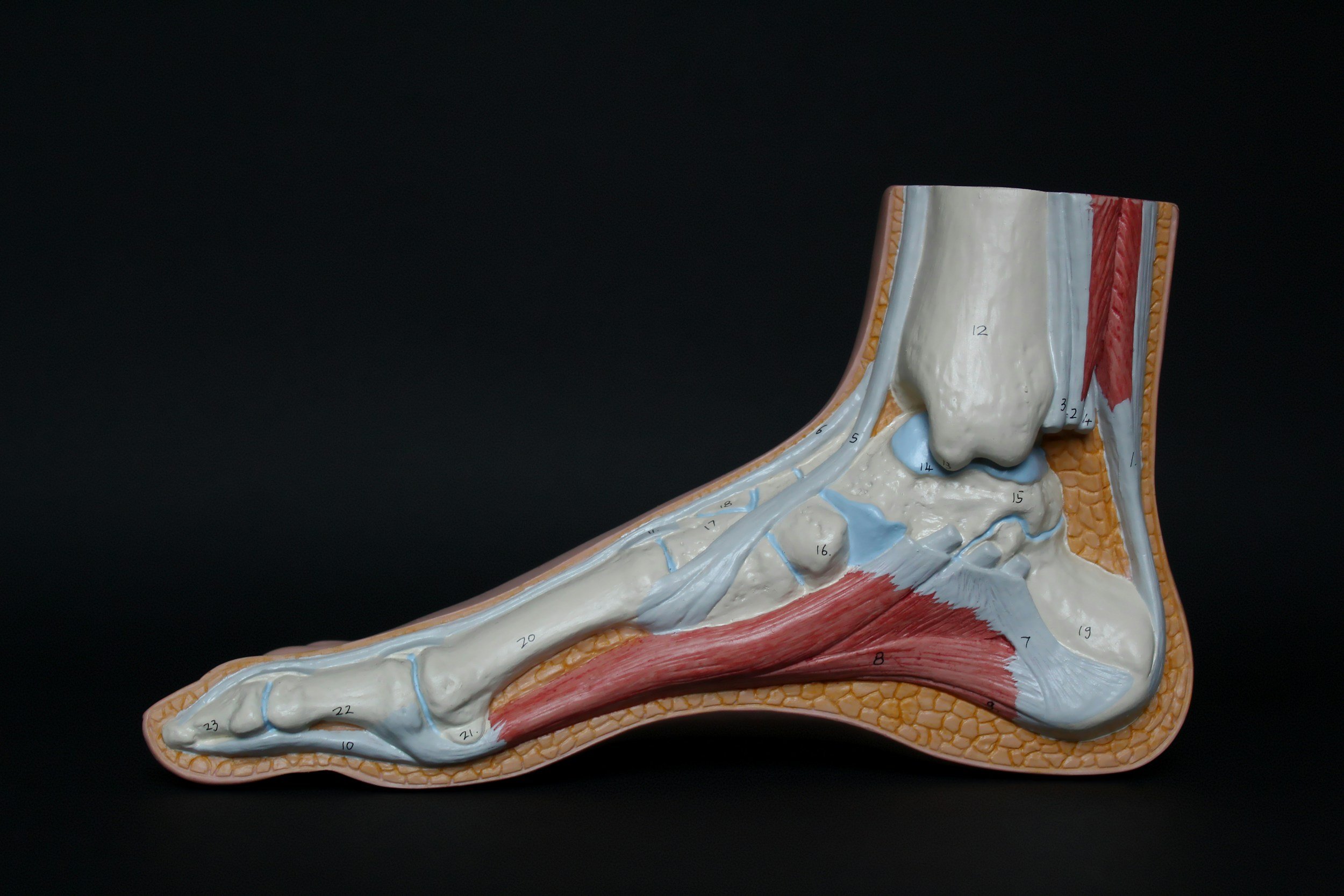
Clinically, these injuries rarely present dramatically in the early stages. Runners will often report a vague, aching pain across the top or inner aspect of the midfoot. The pain is usually worse with running and settles with rest, which makes it easy to ignore or train through initially. Over time, however, symptoms tend to progress. Pain may come on earlier in a run, last longer afterwards, and become more localised. A common finding on assessment is tenderness over the dorsal midfoot, often referred to as the “N-spot”.
In most cases, the underlying issue is not a single cause but a mismatch between load and capacity. Rapid increases in training volume or intensity, inadequate recovery between sessions, or returning too quickly after time off are common contributors. Biomechanical factors such as limited ankle dorsiflexion, foot structure, and inefficient load distribution can also play a role. External factors, including footwear and training surface, may further increase stress through the midfoot.
Navicular stress injuries are well known for being difficult to detect early. Initial imaging such as X-rays is often unremarkable, and symptoms can be vague. As a result, runners may continue training, unintentionally worsening the injury. This delay in diagnosis is one of the key reasons these injuries can become problematic.
Management requires a structured and disciplined approach. Unlike some other running-related injuries, this is not one that can be managed effectively by simply modifying training and pushing through. Offloading the bone is essential, and in many cases this involves a period in a boot or reduced weight bearing depending on severity. Once symptoms settle, a gradual and progressive reload is introduced, alongside targeted strength and capacity work.
A critical phase in recovery is the return to running. This is where many runners run into trouble. Progressing too quickly, skipping strength work, or failing to monitor load can result in recurrence. A successful return requires a staged progression, objective criteria, and ongoing attention to load management.
From a clinical perspective, early assessment is key. Persistent midfoot pain that lasts longer than a week, worsens with running, or repeatedly settles and returns should be taken seriously. Identifying the issue early can significantly reduce time away from running and improve overall outcomes.
Navicular stress injuries can be frustrating, but they are manageable with the right approach. The focus should not only be on getting back to running, but on building the capacity to tolerate load long term. That is ultimately what keeps runners doing what they enjoy.
If something feels off in your foot, don’t push through it and hope for the best.
Get it assessed, get a plan, and do it properly.
Trust the process. Own your comeback.
Book now: