

Recover. Perform. Excel.
SurfEdge Sports Physiotherapy Blog

Urinary leakage during running is relatively common, but it is not something people simply have to accept as “normal”. Running places significant repetitive load through the pelvis and trunk, and for some individuals the demands exceed the current capacity of the pelvic floor system. This article explores pelvic floor dysfunction in runners, common contributing factors, and how evidence informed physiotherapy rehabilitation may help people return to running and exercise with greater confidence.
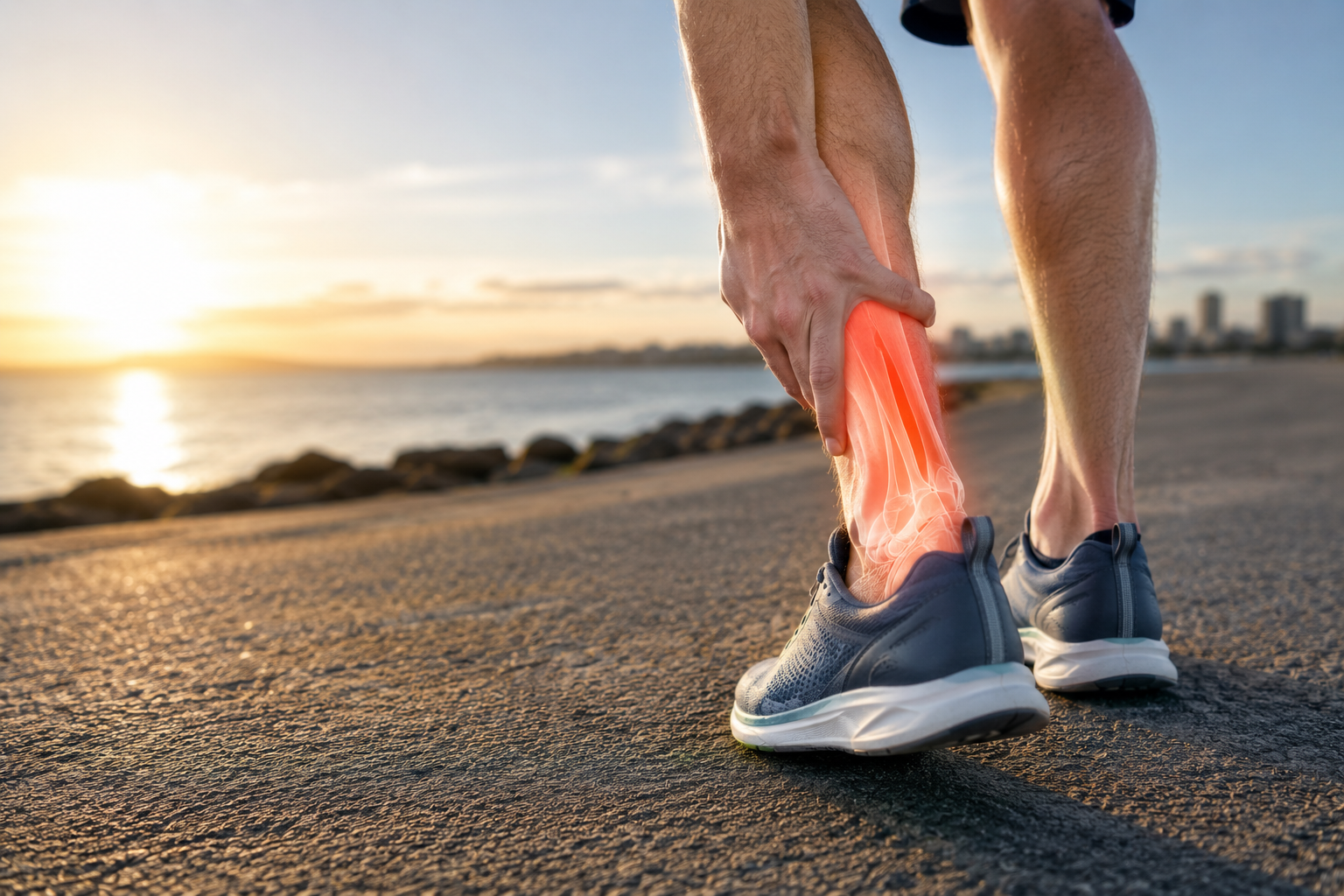
Achilles tendinopathy is a common overload injury affecting runners, active individuals and sporting populations. This article explores the causes, symptoms and evidence-based management of Achilles tendon pain, including progressive loading, rehabilitation principles and return-to-sport considerations. Learn why rest alone often fails and how physiotherapy can help restore tendon capacity and reduce recurrence risk.

Rotator Cuff Related Shoulder Pain: Understanding Shoulder Pain Beyond “Impingement”
Rotator cuff related shoulder pain is one of the most common causes of shoulder pain in active adults, gym-goers, swimmers, and overhead athletes. Learn how physiotherapy management, progressive loading, and evidence-based rehabilitation can help improve shoulder pain, restore strength, and safely return you to training, sport, and daily activity.

Deep Vein Thrombosis (DVT): When Calf Pain Is Something More Serious
Calf pain isn’t always a muscle strain. Learn the key signs of deep vein thrombosis (DVT), how it differs from typical injuries, and when to seek urgent medical attention.

Navicular Stress Injuries in Runners: Why This One Matters
Navicular stress injuries are one of the most commonly missed causes of midfoot pain in runners. If ignored, they can lead to long layoffs. Here’s what to look for and how to manage them properly.

Bone Stress Injuries in Elite Female Athletes - Why it’s rarely just a bone problem
Bone stress injuries in female athletes are rarely just a bone problem. This article explores the role of RED-S, the Female Athlete Triad, and how energy availability impacts injury risk, recovery, and performance.